

UNESCO International Symposium
UNESCO International Symposium on “Coastal Aquifers,Sustainable Futures” |
||
| 10-11 February 2026, UNESCO Headquarters, Paris, France | ||
 |
||
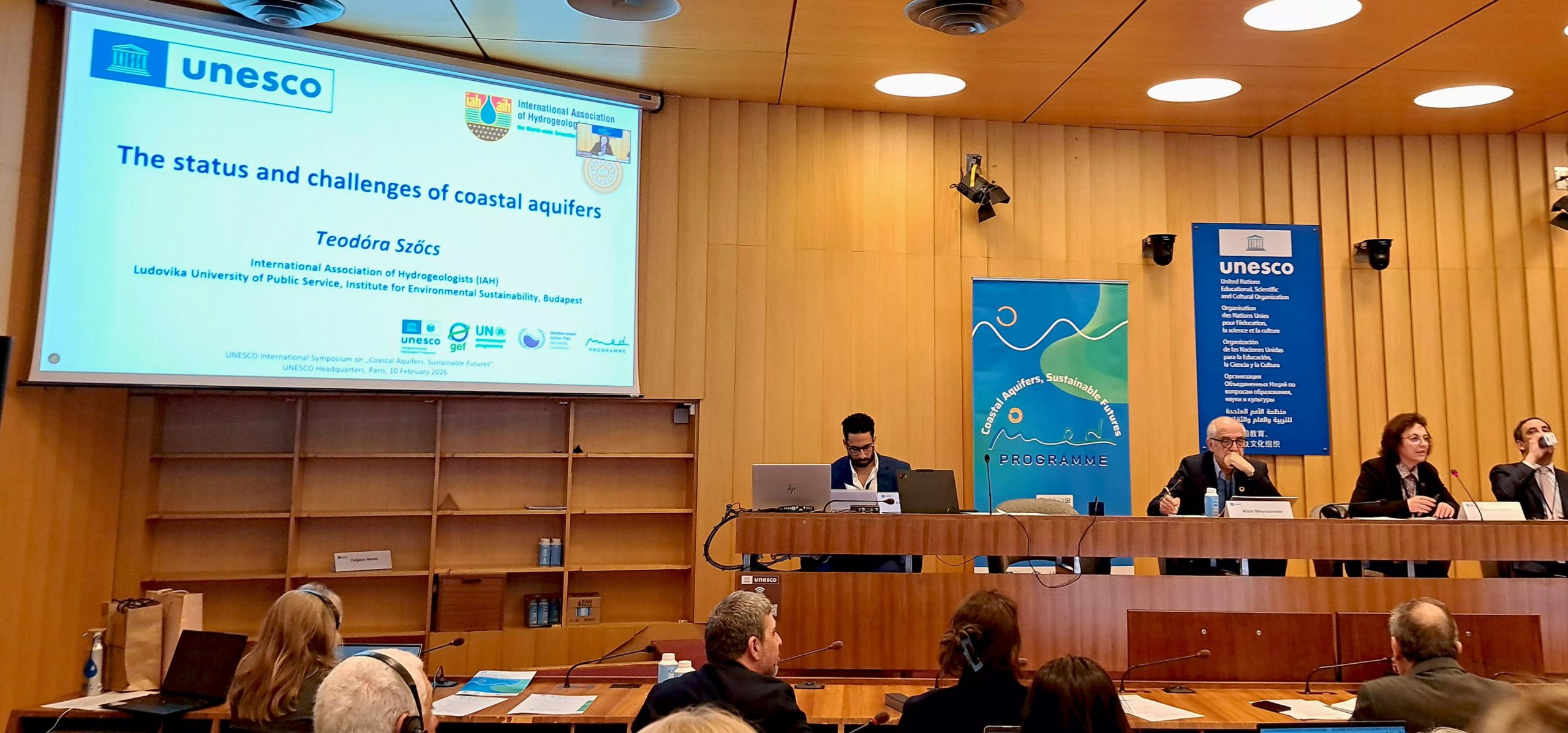
| The introductive keynote lecture of the IAH President Dr Teodóra Szőcs. | ||
 |
 |
|
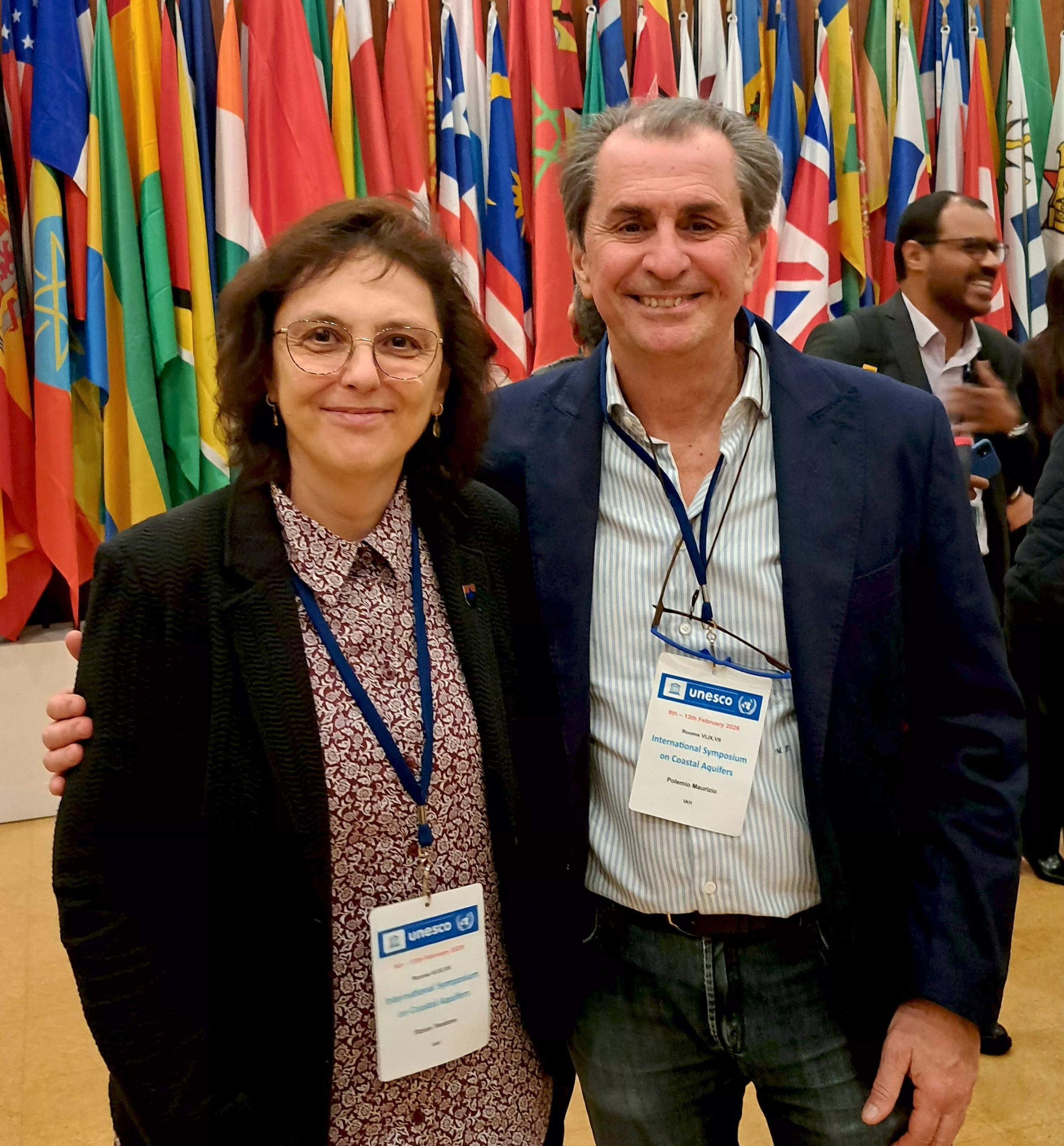
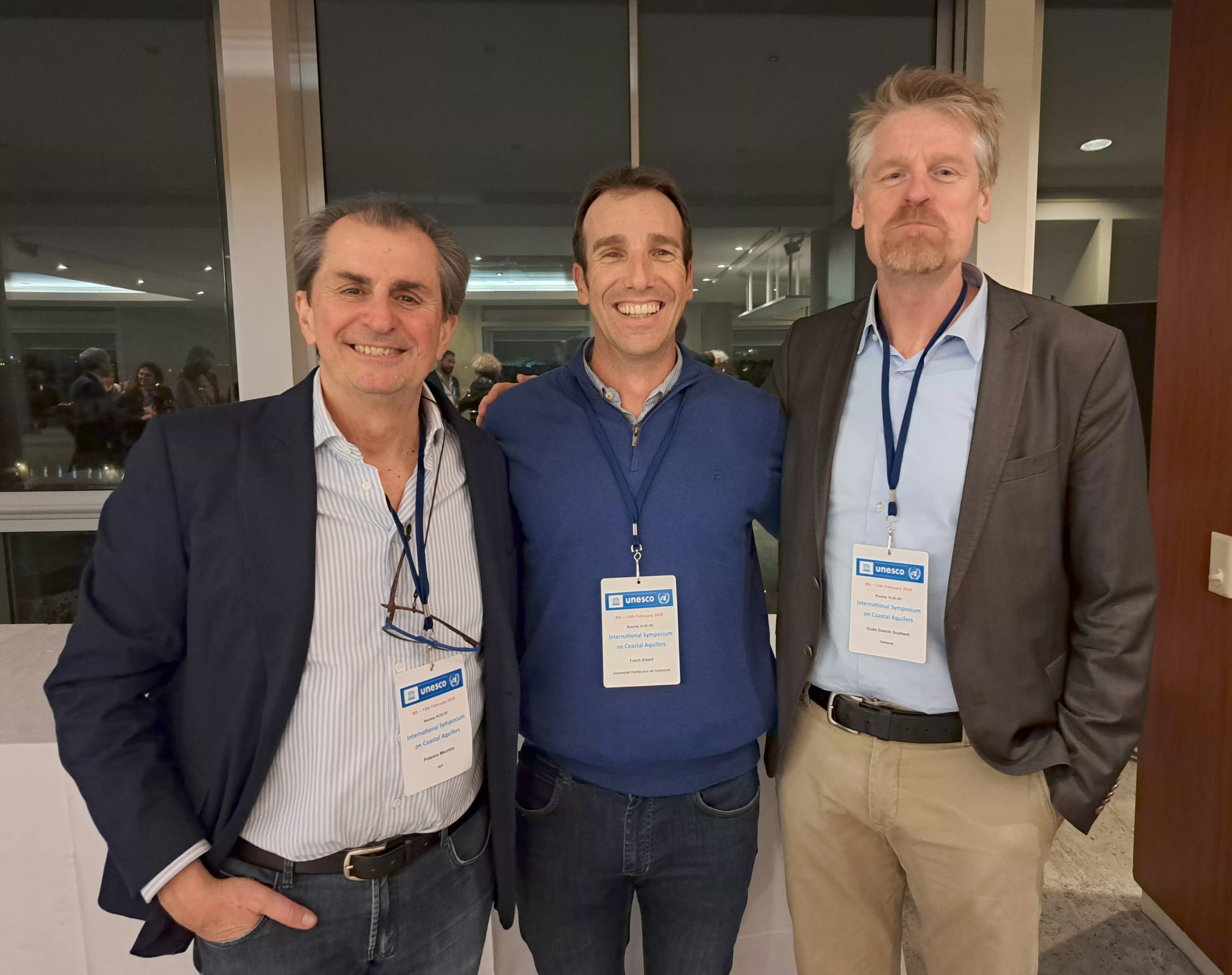
| Dr Teodóra Szőcs (IAH President) and Dr Maurizio Polemio (CGN Director) | Dr Maurizio Polemio (CGN Director), Dr Albert Folch and Dr Gualbert Oude Essink (CGN Co-Directors). | |
BACKGROUND
Coastal aquifers represent one of the most strategic freshwater resources globally, and their importance is particularly evident in the Mediterranean region. They provide essential water for drinking, agriculture, and industrial needs, sustaining the livelihoods of millions of people. However, these vital resources are increasingly under severe environmental and anthropogenic pressures. Growing populations, rapid urbanization, agricultural expansion, and rising industrial demands have placed coastal aquifers at the center of mounting challenges that threaten their long-term sustainability. Overexploitation, pollution, seawater intrusion, and ecosystem degradation are becoming widespread, creating significant risks for both human and environmental well-being.
As highlighted in the Coastal Aquifer Supplement (2012) to the Mediterranean Sea Transboundary Diagnostic Analysis (TDA) and further evidenced by the findings of the UNEP/GEF MedPartnership (2010-2015) and the ongoing UNEP/GEF MedProgramme (2021-2026) where UNESCO executes groundwater components, the degradation of coastal aquifers undermines the health and resilience of marine and coastal ecosystems. These aquifers not only supply freshwater but also sustain wetlands, estuaries, lagoons, and other groundwater-dependent ecosystems that provide invaluable ecological services, from maintaining biodiversity to supporting tourism and local economies. Yet, the absence of effective management frameworks, limited monitoring, and insufficient public awareness have left these resources vulnerable to unchecked exploitation and neglect. Rising sea levels and changing rainfall patterns, driven by climate change, further exacerbate these pressures, increasing the risk of saltwater intrusion and compromising water quality.
©PAP/RAC, UNESCO, 2023.
OBJECTIVES AND SCOPE
In this context, the UNESCO International Symposium on “Coastal Aquifers, Sustainable Futures” serves as a platform to foster scientific exchange, policy dialogue, and collaborative solutions for the sustainable management of these critical resources. Organized under the framework of the UNEP/GEF MedProgramme’s Child Project 2.1, where UNESCO acts as an executing partner, the symposium seeks to advance knowledge on the complex interactions between coastal aquifers and marine systems. It will explore global and regional experiences, with a focus on the Mediterranean region, including the characterization, assessment and management recommendations for five priority aquifers: Rhiss-Nekkor in Morocco, Ras Jebel in Tunisia, Jifarrah Plain in Libya, Damour in Lebanon, and Buna/Bojana shared by Albania and Montenegro.
Through a series of technical sessions and panel discussions, the symposium will address key themes such as the role of Submarine Groundwater Discharges (SGD) in maintaining marine water quality, strategies to mitigate seawater intrusion, and the importance of protecting Groundwater-Dependent Ecosystems (GWDE). It will also highlight the need for integrated approaches to coastal aquifer management that link science, policy, and practice, emphasizing the importance of conjunctive management of surface water and groundwater resources to ensure long-term sustainability. Building on innovative frameworks, the discussions will explore the source-to-sea approach, which addresses the interconnections between freshwater systems, coastal zones, and marine environments, as well as the Water-Energy-Food-Ecosystems (WEFE) Nexus, which promotes holistic solutions balancing environmental protection with socio-economic development.
Furthermore, the symposium will underline the integration of coastal aquifer management into broader policy frameworks, including Integrated Coastal Zone Management (ICZM), climate change adaptation, and disaster risk reduction. By fostering cross-sectoral dialogue and strengthening cooperation among countries, scientists, policymakers, civil society, and local stakeholders, with a particular focus on gender and youth inclusion, the event seeks to advance shared data, knowledge, and governance mechanisms for more resilient and sustainable coastal systems.
The Symposium will explore pathways for enhancing cross-border cooperation, recognizing that many coastal aquifers and marine systems are shared resources requiring collective action. Discussions will focus on developing coherent legal and institutional frameworks that support integrated management while facilitating collaboration among national authorities, regional organizations, and local stakeholders. In addition, the event will emphasize innovative financing mechanisms and investment strategies to support the implementation of management plans, restoration measures, and capacity-building initiatives, ensuring long-term sustainability and resilience of coastal aquifer systems.
SESSIONS DESCRIPTION
Session 1 – Freshwater/marine interactions: Submarine Groundwater Discharges (SGD)
Sessions 1a & 1b: The two technical sessions dedicated to this topic will showcase the latest advances in research, methodologies, and techniques for efficiently characterizing and assessing Submarine Groundwater Discharges (SGD). Although SGD represents a significant portion of freshwater inputs to the Mediterranean, exceeding 25% in some areas, their occurrence, magnitude, and impacts have not been sufficiently characterized or assessed across many coastal regions of the basin. These sessions will draw on case studies from the Mediterranean, including coastal aquifers investigated under the MedProgramme, to present key findings and insights into the dynamics of SGD and their critical role in sustaining shallow marine water quality and ecosystems. To provide a broader perspective, examples from other regions around the world will also be featured, enabling participants to compare approaches and strengthen their understanding of the current state of global knowledge on this important phenomenon.
Session 2 – Freshwater/marine interactions: Seawater intrusion and Groundwater Dependent Ecosystems (GWDE)
Session 2a: The session on seawater intrusion will examine its impacts on water quality and the health of groundwater-dependent ecosystems, highlighting the significant challenges it poses for coastal aquifer sustainability. Drawing on findings from the five priority coastal aquifers studied under the MedProgramme, the session will present key case studies and discuss lessons learned. In addition, results from a preliminary 3D model on seawater intrusion and salinity distribution across coastal aquifers in six Mediterranean countries, based on global datasets, will be showcased to provide new insights and guide future management strategies.
Session 2b: The session on Groundwater-Dependent Ecosystems (GWDE) will explore the vital role coastal aquifers play in sustaining unique and diverse ecosystems, including wetlands, estuaries, lagoons, humid zones, and other coastal habitats that are critical for numerous plant and animal species. Drawing on preliminary results from the characterization and assessment of GWDE in four Mediterranean countries, as well as insights from other regions worldwide, the session will examine the interdependencies between groundwater and ecosystem health. It will highlight how effective coastal zone
management practices that prioritize the conservation and restoration of these ecosystems contribute not only to biodiversity preservation but also to the protection of aquifer recharge areas and the maintenance of groundwater quality, ensuring the long-term sustainability of both natural resources and coastal livelihoods.
Session 3 – Integrated and inclusive approaches to Coastal Aquifer Management
Session 3a: This session will take stock of current approaches implemented to manage water resources, with a particular focus on aquifers and groundwater in the context of coastal areas. It will explore three important integrated frameworks. The Source-to-Sea approach focuses on understanding and managing the interconnected flows of water, nutrients, pollutants, and sediments from inland sources through rivers and aquifers to coastal and marine environments, aiming to ensure the health and sustainability of the entire system. The Integrated Coastal Zone Management (ICZM) framework promotes the coordinated management of coastal areas by balancing environmental, social, and economic objectives, while addressing competing demands on land and water resources. In relation to groundwater resources, the Water-Energy-Food-Ecosystems WEFE Nexus highlights groundwater’s critical role in supporting agriculture, energy generation, and ecosystem health, while emphasizing the need to manage its use sustainably to prevent depletion and degradation. Examples of successful implementation of these approaches in the Mediterranean will be presented and discussed, highlighting lessons learned and opportunities for replication in other regions.
Session 3b: This session will showcase concrete experiences of stakeholder engagement to demonstrate effective ways of involving national and local policymakers, decision-makers, water users, academia, and civil society groups — including gender and youth representatives — in national dialogues and consultations. The goal is to inform sound policies and management strategies for coastal aquifer management. The MedProgramme has generated several good practices from six countries and has developed a methodology to integrate gender-disaggregated data into the decision-making process, ensuring more inclusive and equitable outcomes.
Session 4 – Planning Coastal Aquifers Management
Session 4a: This session will present the Coastal Aquifer Management Plans developed for the five priority coastal aquifers studied under the MedProgramme, highlighting their main features. It will showcase the methodology and participatory process — facilitated by UNESCO — that bridges science and policy in developing these CAMPs. The session will engage decision-makers and stakeholders to discuss how these pilot CAMPs can serve as a validated approach for replication across other countries in the Mediterranean region and beyond. Additionally, examples from CAMPs implemented in other coastal aquifers
Session 4b: This session will explore the application of Conjunctive Surface Water and Groundwater Management principles to coastal areas, emphasizing the inseparable link between coastal aquifers and surface water systems due to their dynamic interaction with rivers, lakes, and ecosystems. Examples of effective solutions implemented in the Mediterranean and beyond will also be showcased. Within the framework of the MedProgramme, six national stakeholder dialogues were conducted, resulting in strategic and operational recommendations that will be summarized and discussed during the session.
Session 5: Shaping Water Futures: Governance Strategies for Coastal Aquifers (75’) This session will explore current and emerging needs, strategies, and opportunities for integrating coastal aquifer management into institutional, governance, and legal frameworks. The discussion will focus on developing policies that effectively address challenges at the aquifer level and highlight the importance of strengthened cooperation among ministries, national agencies, and local stakeholders to establish robust governance mechanisms. In transboundary contexts, where coastal aquifers are shared by multiple riparian countries, the panel will also examine the added complexities and potential pathways for fostering effective regional collaboration.
Session 6: Water Beneath, Partnerships Above: Financing and Cooperation for Coastal Aquifers
Building on the conclusions and recommendations from previous panels, this discussion will focus on strategies for effectively implementing Coastal Aquifer Management Plans (CAMPs) and related management frameworks. The panel will explore investment needs and suitable financial mechanisms to support these efforts. Invited institutions will also examine ways to strengthen institutional cooperation and establish key partnerships to ensure the successful implementation and long-term sustainability of coastal aquifer
PANELS DESCRIPTION
Panel on Coastal Aquifers: Status and Challenges
The invited panelists will discuss the current status and key challenges facing coastal aquifers, as highlighted in the two introductory presentations. They will examine the underlying causes and contributing factors, including overexploitation, pollution, ecosystem degradation, and climate change, and raise critical questions on how to address these issues. The discussion will also set the stage for exploring solutions and strategies to reverse negative trends, which will be further examined throughout the Symposium.
Panel on Knowledge, Methodologies, and Tools
This panel will explore the latest science, technologies, methodologies, and tools that support the characterization, assessment, and sustainable management of coastal aquifers. Invited institutions and experts will evaluate their applicability and limitations, while also proposing new directions for advancing science and technology. The discussion will focus on how these innovations can better support policymakers and water managers in developing and implementing effective strategies and management plans for coastal aquifers.

