Publisher
|
|
Cover
|
|
|
 |
|
 |
|
|
 |
|
 |
|
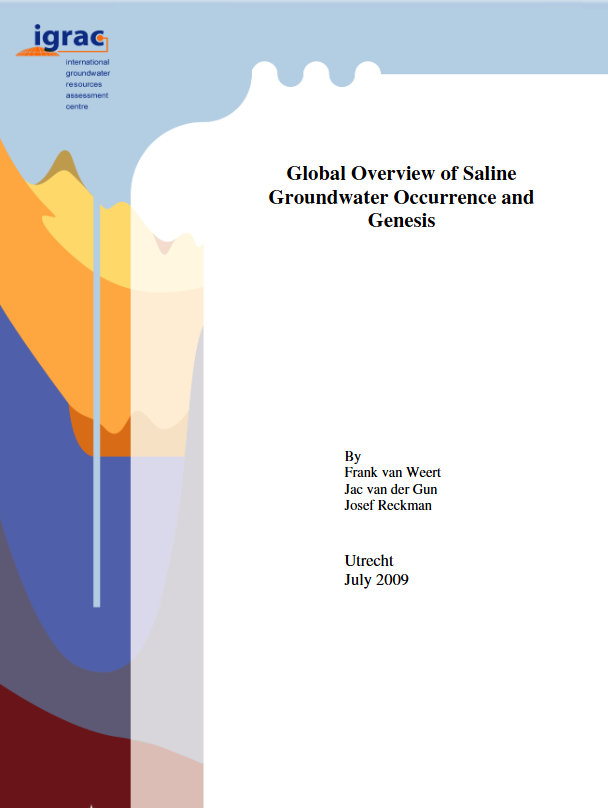
The report provides a global overview of the occurrence, distribution, and origin of saline groundwater, including brackish groundwater and brines. It examines natural, marine, anthropogenic, and mixed salinization processes, as well as the risks, opportunities, and management strategies associated with saline groundwater. The report also considers how climate change, groundwater abstraction, and land-use changes may influence groundwater salinity worldwide. It is intended for groundwater managers, engineers, researchers, and policymakers. |
 |
|
 |
|
Textbooks on Hydrology is a UNESCO publication that reviews and compares selected university-level hydrology textbooks published in several languages. It includes detailed analyses of 19 works and comparative tables covering general hydrology, groundwater hydrology, hydrometry, and hydrological forecasting. Developed within the International Hydrological Decade, it was intended to support universities and teachers in selecting textbooks, designing curricula, identifying educational gaps, and encouraging the translation or publication of hydrology texts |
|
|
 |
|
The United Nations World Water Development Report 2024: Water for Prosperity and Peace examines the close relationship between sustainable water management, economic and social prosperity, and peace. It highlights the global challenges of water scarcity, unequal access, pollution, climate change, and inadequate sanitation, while showing how cooperation, equitable governance, investment, technology, education, and transboundary water management can reduce tensions and support sustainable development. The report addresses water use across agriculture, industry, energy, ecosystems, human settlements, and regional contexts, and is mainly intended for policymakers, water managers, researchers, and development professionals. |
|
|
 |
|
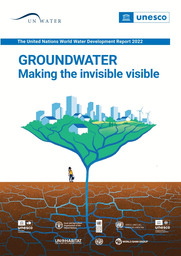
The United Nations World Water Development Report 2022: Groundwater – Making the Invisible Visible highlights the essential role of groundwater in water supply, agriculture, industry, ecosystems, and climate resilience. It examines the main challenges affecting aquifers, including overexploitation, depletion, pollution, seawater intrusion, weak governance, and limited monitoring. The report also presents opportunities for sustainable groundwater management through improved knowledge, regulation, integrated water planning, aquifer recharge, international cooperation, and stronger institutional and financial support |
|
|
 |
|
Drought Risk Management: A Strategic Approach presents a framework for shifting drought management from emergency response to continuous, proactive risk reduction. It introduces Strategic Drought Risk Management as an adaptive process based on data collection, risk assessment, planning, monitoring, stakeholder participation, and regular review. The book examines drought hazards, vulnerability, ecosystem impacts, water allocation, forecasting, preparedness, recovery, and long-term resilience, supported by international case studies from several regions. |
|
|
|
|
|
|
|
|
|
|
|
|
|
|
|
|
|
|
|
|